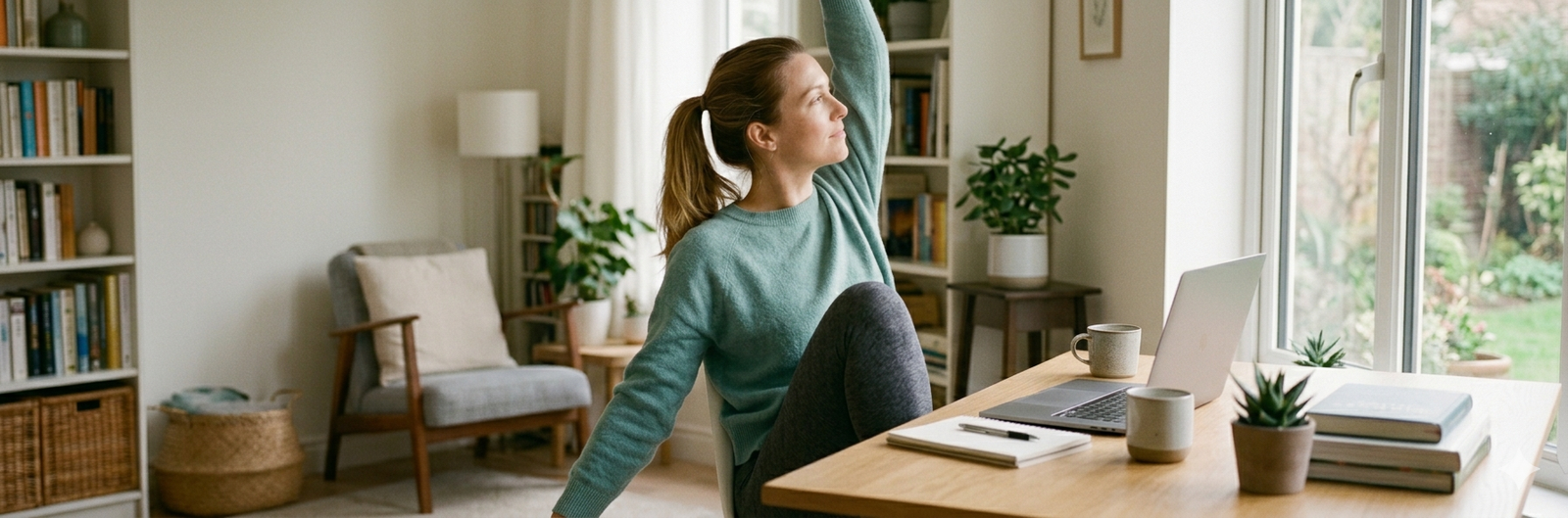
Sitting has become a normal part of modern life. Many people sit while working, studying, commuting, eating, watching TV, using a phone, or relaxing at the end of the day. For busy people, sitting can quietly fill most of the schedule without much notice.
The challenge is not that people do not know movement matters. Most of us already understand that the body is meant to move. The real challenge is finding realistic ways to move more when the day is full, work is demanding, and long workouts are not always possible.
The good news is that movement does not have to be complicated. You do not need a full gym session, special equipment, or a perfect routine to support your body. Small movement breaks throughout the day can help reduce stiffness, refresh your mind, and make your body feel more awake.
If you sit for many hours, the goal is not to completely change your life overnight. The goal is to add simple movement into the life you already have.
Start With the Idea of “Movement Snacks”
A movement snack is a short burst of movement that takes only a few minutes. It might be a quick stretch, a walk around the room, a few squats, shoulder rolls, or standing while taking a call.
This idea is helpful because many busy people do not have one large block of time for exercise. But most people can find one or two minutes between tasks.
Movement snacks are small, but they can add up.
For example, you might move for two minutes every hour during your workday. By the end of eight hours, that becomes 16 minutes of movement. It may not feel like much in the moment, but your body will notice the difference.
You do not need to sweat. You only need to interrupt long periods of sitting.
Stand Up Every Hour
One of the simplest ways to move more is to stand up regularly. When you are focused on work, hours can pass quickly. A gentle reminder can help.
Set a timer for every 45 to 60 minutes. When it goes off, stand up for a moment. Stretch your arms. Roll your shoulders. Walk to get water. Look away from the screen. Take a few slow breaths.
This break does not need to be long. Even one minute can help you reset.
If you do not want to use a timer, connect standing to things you already do. Stand up after every meeting. Stand when you finish a task. Stand before checking your phone. Stand after sending an email.
The key is to break the sitting pattern.
Walk While Taking Phone Calls
Phone calls are a great opportunity for movement. If you do not need to look at a screen or take notes, try walking while you talk.
You can walk around your home, office, hallway, backyard, or nearby outdoor space. Even slow walking is useful. It keeps your body active and can make the conversation feel more natural.
This habit works especially well for personal calls, informal work calls, or audio meetings where your camera is off.
Walking calls also make movement feel less like a separate task. You are already on the phone, so you are simply changing how you use that time.
Keep Water Farther Away
Keeping water nearby is helpful for hydration, but placing it a little farther away can encourage movement.
For example, instead of keeping your water bottle on your desk all day, place it across the room. Each time you want a drink, you have to stand up and walk a few steps. This small action gives your body a break from sitting.
If you work in an office, you can use trips to refill water as movement breaks. If you work from home, choose a kitchen or counter space that makes you walk.
This habit supports two things at once: drinking more water and moving more often.
Stretch at Your Desk
You do not need a yoga mat to stretch. Many simple stretches can be done at your desk or beside your chair.
Try shoulder rolls to release tension. Gently turn your head from side to side to stretch your neck. Reach both arms overhead. Stretch your wrists after typing. Open your chest by clasping your hands behind your back. Extend one leg and flex your foot to wake up your legs.
These movements take very little time and can be done quietly.
If you sit at a computer for long hours, your neck, shoulders, wrists, back, and hips may become stiff. A few small stretches throughout the day can make sitting feel less draining.
The goal is not to perform a perfect stretch routine. The goal is to notice tension and give your body a little relief.
Use Waiting Time
Waiting time appears in many parts of the day. Waiting for coffee. Waiting for a file to upload. Waiting for a meeting to start. Waiting for food to heat. Waiting for someone to reply.
Instead of staying seated during every small pause, use some of those moments to move.
You can stand, stretch, walk around the room, do calf raises, or gently twist your body. If you are at home, you can do a few squats or march in place. If you are in an office, you can simply stand and shift your weight from one foot to the other.
These small movements may seem too simple, but they help your body avoid long periods of stillness.
Take the Longer Route
When you sit most of the day, small extra steps can be helpful.
Take the longer route to the restroom. Park a little farther away. Use stairs when it is comfortable and safe. Walk to speak with someone instead of sending a message when appropriate. Take a lap around the room before sitting down again.
These choices do not require a major schedule change. They simply add movement to things you are already doing.
A few extra steps here and there can make your day feel more active without needing a formal workout.
Create a Transition Walk
Transitions are moments when you move from one part of the day to another. These moments are useful because they already exist.
You might take a short walk:
- Before starting work
- After lunch
- Between meetings
- After finishing work
- Before dinner
- After dinner
A transition walk can be as short as five minutes. Walk around the block, around the building, through your hallway, or even inside your home.
This habit helps your body move and gives your mind a signal that one part of the day is ending and another is beginning.
For people who work from home, this can be especially helpful. A short walk before and after work can create a boundary between work life and home life.
Make Meetings More Active
Not every meeting needs to happen while sitting. If the meeting is casual, short, or audio-only, consider making it active.
You can stand during the meeting, walk slowly, or stretch while listening. If you are meeting with one person, you might suggest a walking meeting.
This does not work for every situation, but it can work more often than people think.
Even standing during one meeting each day can reduce sitting time. If your schedule is full of back-to-back calls, this small change can make a noticeable difference.
Set Up Your Space for Movement
Your environment can remind you to move.
Keep comfortable shoes nearby. Place a small stretch band on your desk. Leave a yoga mat where you can see it. Put a sticky note on your monitor that says “stand” or “stretch.” Keep your water across the room. Use a chair that allows good posture. Create enough space near your desk to stand and move.
When movement is easy to access, you are more likely to do it.
Busy people often do not need more motivation. They need fewer obstacles.
Try Simple Bodyweight Movements
If you want a little more activity during breaks, try simple bodyweight movements. These do not require equipment and can be done in a small space.
You might do:
- 5 chair squats
- 10 calf raises
- 10 standing marches
- 5 wall push-ups
- 10 arm circles
- 5 gentle lunges
- 20 seconds of stepping side to side
Choose movements that feel good for your body. If something causes pain or discomfort, skip it.
The purpose is not to create a difficult workout. The purpose is to wake up the muscles and bring energy back into the body.
Move After Meals
A short walk after meals can be a simple way to reduce sitting and support digestion. It does not need to be long or fast.
After breakfast, lunch, or dinner, walk for five to ten minutes if you can. Walk around your home, outside, or through your workplace. If walking is not possible, stand and gently move for a few minutes.
This habit works well because meals already happen every day. Connecting movement to meals makes it easier to remember.
Even a short post-meal walk can help you feel less sluggish.
Reduce Screen-Based Sitting at Home
Many people sit all day for work and then sit again at night for entertainment. Rest is important, but if your body has been still all day, try adding gentle movement to screen time.
Stretch while watching TV. Stand during one episode. Walk around during commercials or breaks. Fold laundry while watching something. Do light mobility exercises while listening to a podcast.
This keeps relaxation from becoming more hours of stillness.
You do not need to turn evening time into a workout. Just give your body a few chances to move.
Listen to Your Body
Movement should support you, not punish you. If you have been sitting all day, your body may feel stiff or tired. Start gently.
Pay attention to how your neck, shoulders, back, hips, and legs feel. Move in ways that feel comfortable. If you have pain, dizziness, injury, or a medical condition, it is best to speak with a healthcare professional before changing your activity routine.
Wellness habits should be flexible. Some days you may move more. Some days you may only manage a few short breaks. That still matters.
Final Thoughts
Moving more when you sit all day does not require a complete lifestyle change. It begins with small, realistic choices.
Stand up every hour. Walk during phone calls. Stretch at your desk. Use waiting time. Take the longer route. Walk after meals. Make meetings more active. Add small movement snacks throughout the day.
These habits may seem simple, but they help interrupt long periods of sitting and bring more energy into your day.
A healthier routine does not always require extra time. Sometimes it only requires using ordinary moments a little differently.
This article is for informational purposes only and is not a substitute for professional medical advice. Always consult a qualified healthcare provider before making changes to your health routine. Read our full disclaimer.