
For years, sleep was the first thing I cut when life got busy. One more email, one more load of laundry, one more episode to finally have some time to myself. I told myself I could catch up on the weekend. But the next day I would feel it: slower in the morning, short on patience by the afternoon, and reaching for coffee and something sweet just to keep going.
If that sounds familiar, you are not alone. Sleep is often the easiest thing to squeeze when the day is full. Here is how much sleep adults actually need, how to tell if you are running short, and realistic ways to get a little more rest without overhauling your whole life.
How Much Sleep Do Adults Need?
According to the CDC, most adults ages 18 to 60 need 7 or more hours of sleep each night. The recommendation changes slightly with age:
| Age group | Recommended sleep per night |
|---|---|
| Teens (13–17 years) | 8–10 hours |
| Adults (18–60 years) | 7 or more hours |
| Adults (61–64 years) | 7–9 hours |
| Adults (65 years and older) | 7–8 hours |
Source: CDC, About Sleep. These are general guidelines. Some people feel best at the higher end of the range, especially during stressful or physically demanding seasons.
🗓️ A busy-day example
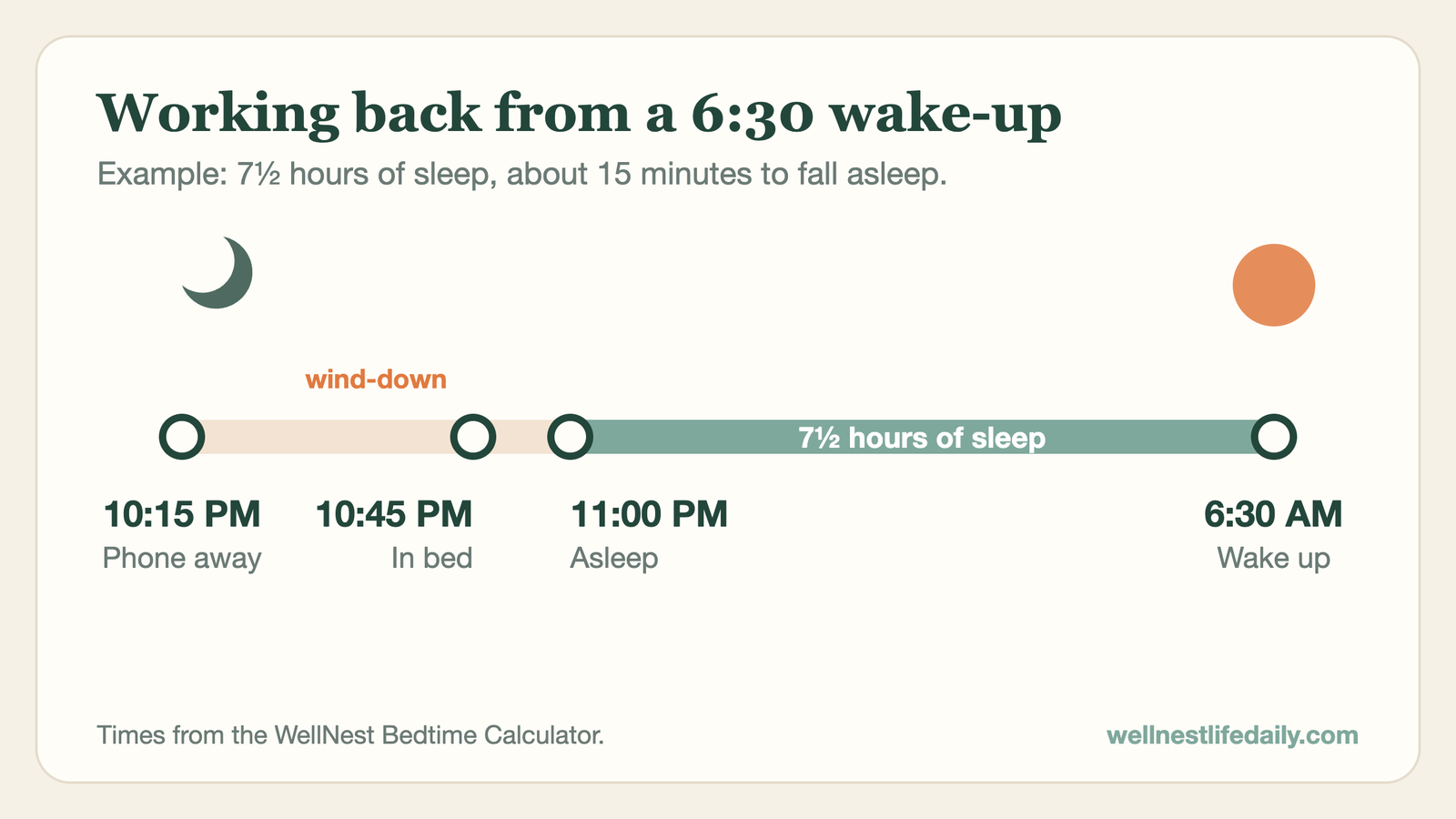
Say you need to be up at 6:30 AM and want 7½ hours of sleep. It takes you about 15 minutes to fall asleep, and you want 30 minutes of screen-free wind-down. Our Bedtime Calculator gives this plan:
- 10:15 PM: phone away, start winding down
- 10:45 PM: get into bed
- 11:00 PM: asleep
- 6:30 AM: wake up
If you usually go to bed much later, move your bedtime 15 minutes earlier every few nights instead of all at once. Find your own times in the Bedtime Calculator.
Signs You May Not Be Getting Enough Sleep
Many busy people get used to feeling tired and stop noticing it. A few common signs that your sleep may be running short:
- You need an alarm, then several snoozes, almost every day
- You rely on caffeine to get through the morning and again in the afternoon
- You hit a strong afternoon slump most days
- Small things irritate you more than usual
- You find it hard to focus or keep forgetting simple things
- You sleep much longer on weekends to “catch up”
Everyone has an off night now and then. But if these signs show up most days, it is worth looking at your sleep first before trying more complicated fixes.
Why Sleep Gets Squeezed on Busy Days
Sleep rarely disappears because we do not care about it. It disappears because it is the most flexible part of the day. Work, family, chores and commitments all have fixed times, while bedtime quietly slides later. Late evenings can also be the only quiet time some people get, so it is tempting to stay up and enjoy it.
Seeing this pattern clearly helps. Instead of trying to “find” more time, you protect sleep the same way you protect any other appointment.
8 Realistic Ways to Get More Sleep
Several of these tips come straight from the CDC’s advice for better sleep. Pick one or two to start with rather than trying all of them at once.
1. Work backward from your wake-up time
If you need to be up at 6:30 AM, 7 hours of sleep means being asleep by 11:30 PM, and in bed a little earlier. Set a “start winding down” reminder on your phone for 30 to 45 minutes before that.
2. Keep a consistent schedule
Going to bed and waking up at roughly the same time each day, including weekends, helps your body know when to feel sleepy and when to feel alert.
3. Put screens away about 30 minutes before bed
The CDC suggests stopping electronic devices about half an hour before bed. Charge your phone outside the bedroom if you can, or at least across the room.
4. Make your bedroom quiet, calm and cool
Small changes help: darker curtains, a fan or white noise, and a slightly cooler room. Keep the bed for sleep and rest, not for work.
5. Limit caffeine later in the day
Caffeine in the afternoon and evening can make it harder to fall asleep. Try switching to water or a caffeine-free drink after lunch.
6. Skip large meals right before bed
A heavy dinner late at night can make it harder to settle. If you are hungry, a small snack is usually easier on your body.
7. Move during the day
Staying physically active supports better sleep. Even a short walk counts. Our guide to fitting in a 30-minute walk has easy ideas for busy days.
8. Write down tomorrow’s to-do list
If your mind races at night, spend two minutes writing down what is on your mind and what you need to do tomorrow. It helps your brain let go of it until morning.
A Simple 30-Minute Wind-Down Routine
- 30 minutes before bed: Put your phone on charge and dim the lights.
- 25 minutes: Get tomorrow ready: clothes, bag, a quick look at your to-do list.
- 15 minutes: Wash up and change into comfortable clothes.
- 10 minutes: Read a few pages of a book, stretch gently, or try a slow breathing exercise.
- Lights out.
If you want help with the breathing part, our simple breathing habits work well at bedtime too.
🧮 Try the free tools: use the Bedtime Calculator to find what time to go to bed for your wake-up time, and the Habit Timeline Calculator to see how long a new bedtime routine may take to feel automatic.
Frequently Asked Questions
Is 6 hours of sleep enough?
For most adults, no. The CDC recommends 7 or more hours for adults ages 18 to 60. Some people feel fine on less for a short time, but regularly sleeping 6 hours or less usually leaves people more tired than they realize.
Can I catch up on sleep on the weekend?
Sleeping in a little can help you feel better after a short week, but it does not fully make up for regular short sleep. A steady schedule most days of the week works better than a big weekend catch-up.
What is the best time to go to bed?
There is no single best time for everyone. The best bedtime is the one that gives you 7 or more hours before your usual wake-up time and that you can keep on most nights.
Why am I still tired after 8 hours of sleep?
Sleep quality matters as well as hours. Noise, light, late caffeine, stress and an irregular schedule can all affect how rested you feel. If you often wake up exhausted, snore loudly, or feel very sleepy during the day even with enough sleep, talk to a doctor.
Are naps a good idea?
A short nap can help some people, but long or late naps can make it harder to fall asleep at night. If you nap, keep it brief and earlier in the day.
The Bottom Line
Most adults need 7 or more hours of sleep, but busy lives make that easy to lose. You do not need a perfect routine to sleep better. Start by protecting a bedtime, putting your phone away a little earlier, and building a short wind-down routine. Small, steady changes add up to more energy, more patience, and better days.
This article is for informational purposes only and is not a substitute for professional medical advice. Always consult a qualified healthcare provider before making changes to your health routine. Read our full disclaimer.