
I have a sweet tooth, and I’m not going to pretend otherwise. A cup of sweet tea in the afternoon, a biscuit with it, something sweet after dinner. None of it felt like a lot. But when I actually started noticing, the small amounts were showing up all day long.
I tried the “no sugar at all” approach once. It lasted about four days and ended with me eating half a packet of cookies standing in the kitchen. What worked much better was cutting back slowly, swapping instead of banning, and still enjoying a treat when I really wanted one. Here is what that looks like.
How Much Added Sugar Is OK?
The American Heart Association recommends limiting added sugars to no more than 6% of daily calories. For most women, that’s about 100 calories or 6 teaspoons a day. For most men, it’s about 150 calories or 9 teaspoons.
On a Nutrition Facts label, added sugars are listed in grams. Roughly 4 grams equals 1 teaspoon, so 6 teaspoons is about 25 grams. That goes quickly: one sweetened drink can be more than a whole day’s worth.
Natural sugars in whole fruit and plain milk aren’t the concern here. Those come with fiber, protein, vitamins and minerals. The goal is to reduce added sugar.
🗓️ A busy-day example
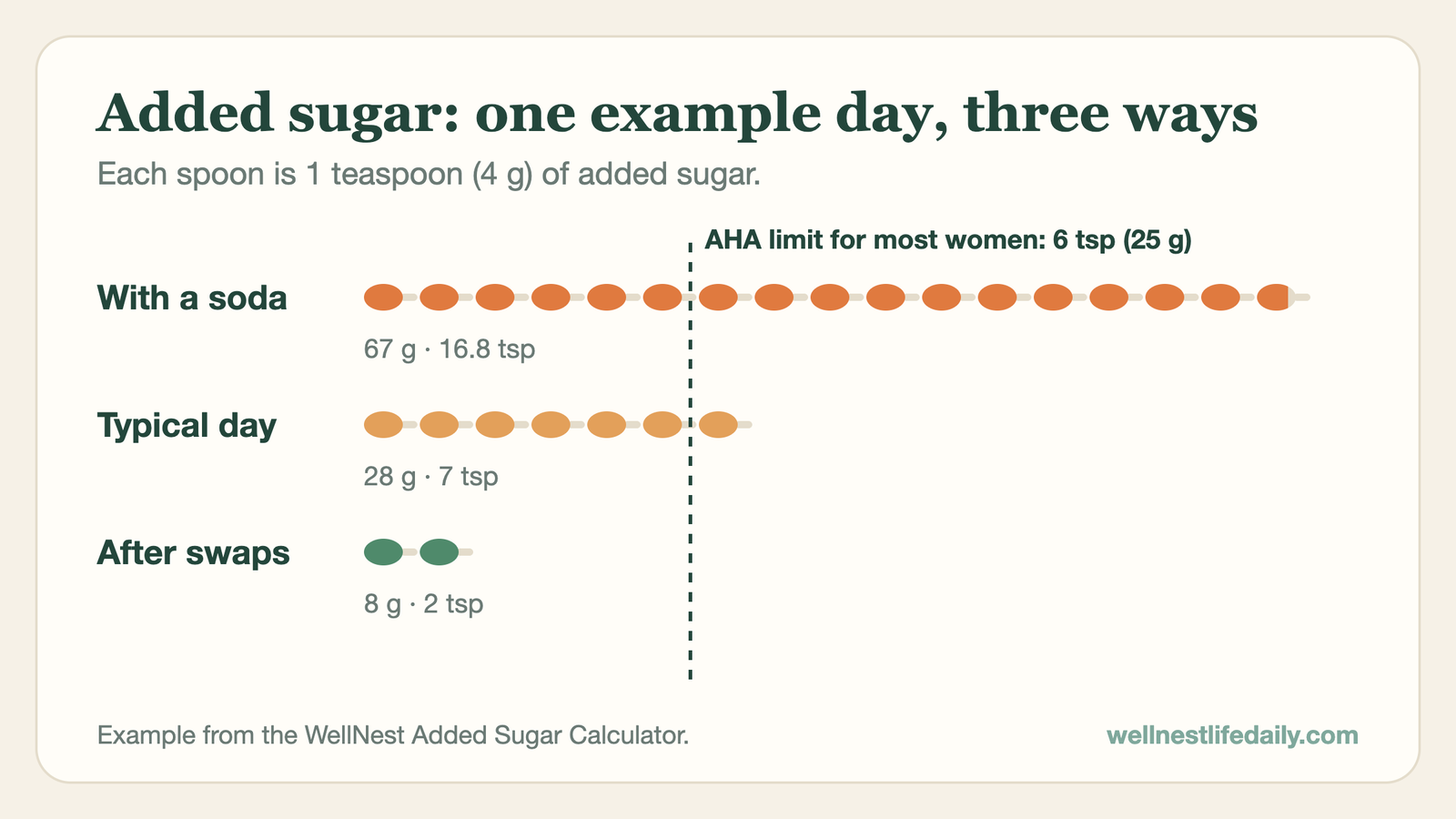
Say a typical day includes a flavored yogurt with 12 g of added sugar, a granola bar with 8 g and two teaspoons of sugar in your coffee. In our Added Sugar Calculator:
- That adds up to 28 g, or 7 teaspoons: 112% of the AHA limit of 25 g for women
- Add a can of regular soda (about 39 g) and the day jumps to 67 g, about 16.8 teaspoons
- Switch to plain yogurt and unsweetened coffee, and only the granola bar’s 8 g is left: 2 teaspoons, or 32% of the limit
Check your own day in the Added Sugar Calculator.
Where Added Sugar Hides
The AHA lists these as common sources of added sugar:
- Regular soft drinks, energy drinks and fruit drinks
- Sweetened tea and coffee
- Candy and ice cream
- Sweetened yogurts and flavored milk
- Breakfast cereals and bars
Some of these surprised me. I thought of flavored yogurt and cereal bars as healthy choices. Checking the “Added Sugars” line on the label was an eye-opener. If you want a quick method, see my guide on how to read a nutrition label in 2 minutes.
Why Going “Cold Turkey” Often Backfires
When you suddenly cut out something you enjoy, it’s easy to feel deprived and then overdo it later. A gentler approach is more likely to stick. Your taste buds also adjust over time. After a few weeks of less sugar, very sweet foods often start to taste too sweet.
12 Realistic Ways to Cut Back
1. Start with drinks
Drinks are the easiest place to make a big difference, because liquid sugar adds up fast and doesn’t fill you up. Replace one sweet drink a day with water, sparkling water, or unsweetened tea.
2. Halve the sugar in your tea or coffee
If you take two spoons, try one and a half for a week, then one. I did this slowly over about a month, and now my old sweetness level tastes like syrup.
3. Buy plain yogurt and sweeten it yourself
Add fresh fruit, a little honey, or cinnamon. You’ll still use far less sugar than the pre-flavored kind.
4. Choose a lower-sugar cereal
Compare the added sugars line and pick one with less. You can also mix a sweeter cereal half-and-half with plain oats or a low-sugar cereal.
5. Use fruit as your sweetener
Mashed banana in oatmeal, chopped dates in baking, or berries on toast all add sweetness with fiber included.
6. Lean on spices
Cinnamon, cardamom, vanilla and nutmeg make food taste sweeter without sugar. Cardamom in tea or cinnamon on oats is one of my favorite tricks.
7. Don’t shop hungry
It sounds simple, but I buy far fewer sweets when I’ve eaten before going to the store. My list of healthy grocery shopping tips helps too.
8. Keep treats out of sight
If cookies are on the counter, I’ll eat them. If they’re in a cupboard and a fruit bowl is on the counter, I usually grab the fruit first.
9. Eat regular meals with protein and fiber
Many of my sugar cravings came from skipping lunch on busy days. Meals with protein and fiber keep blood sugar steadier, so the 4 p.m. craving is much smaller. My post on avoiding the afternoon slump goes into this more.
10. Make treats intentional
Instead of mindless nibbling, I choose a treat I really enjoy, put it on a plate, and sit down with it. Enjoying one piece slowly is more satisfying than eating five while scrolling.
11. Watch the sauces
Ketchup, barbecue sauce, sweet chili sauce and some salad dressings contain more sugar than you’d expect. Use smaller amounts or try simple homemade versions.
12. Get enough sleep
When I’m tired, I crave sugar much more. Protecting sleep is one of the most underrated ways to eat less sugar.
Easy Swaps Table
| Instead of… | Try… |
|---|---|
| Sweetened soft drink | Sparkling water with lemon or a splash of juice |
| Flavored yogurt | Plain yogurt with berries and cinnamon |
| Sugary cereal | Oatmeal with banana or a low-sugar cereal |
| Cookies with tea | A few dates or nuts with tea |
| Ice cream every night | Frozen banana “nice cream” or ice cream twice a week |
| Store-bought smoothie | Homemade smoothie with whole fruit and yogurt |
What to Do When a Craving Hits
- Drink a glass of water and wait ten minutes. Sometimes it’s thirst or boredom.
- Ask if you’re actually hungry. If so, eat a proper snack with protein.
- Have a small portion of the real thing if you still want it. A square of dark chocolate can be enough.
- Move for a few minutes. A short walk often makes the craving fade.
Helping Kids Eat Less Sugar
I don’t make sugar the “bad guy” with my kids, because that can make it even more exciting. Instead, I keep fewer sweet drinks in the house, offer fruit first, and save desserts for certain days. Lunchboxes are an easy place to start; I shared ideas in healthy lunchbox ideas kids will actually eat.
Frequently Asked Questions
Is the sugar in fruit bad for me?
No. Whole fruit contains natural sugar along with fiber, water and nutrients. The recommendation is to limit added sugars, not whole fruit.
How long does it take to stop craving sugar?
It varies, but many people notice their taste preferences start shifting within a few weeks of eating less added sugar.
Are artificial sweeteners a good replacement?
They can help some people transition, but the long-term goal is to get used to less sweetness overall. If you have health concerns, talk to your doctor.
The Bottom Line
Cutting back on sugar works best when it’s gradual and kind. Start with your drinks, swap instead of banning, and leave room for treats you truly enjoy. A few small changes each week can bring your added sugar down a lot, without the feeling of missing out.
🧮 Try the free tool: use the Added Sugar Calculator to turn label grams into teaspoons and see how much of your daily limit you’ve used.
This article is for informational purposes only and is not a substitute for professional medical advice. Always consult a qualified healthcare provider before making changes to your health routine. Read our full disclaimer.